
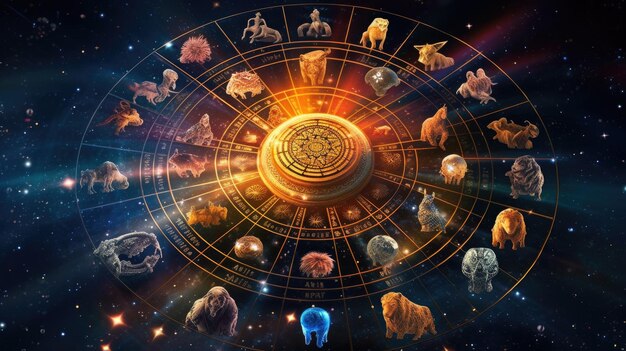
Across centuries and cultures, people have watched the sky and wondered why certain phases of life seem to arrive in waves, periods of momentum, seasons of retreat, sudden changes that feel bigger than personal choice alone. Cosmic cycles offer a poetic lens for these repeating patterns, inviting us to consider time not only as dates on a calendar but as rhythms that shape perception. Even for those who remain unsure, the language of cycles can help frame experience in a way that feels coherent rather than chaotic.
Ancient timing systems in a modern mind
Many traditional societies built calendars around the heavens, tracking shifts in light, weather, and seasonal movement to guide planting, travel, and ritual. The modern world may rely on apps and digital clocks, yet the impulse remains: people still seek signals that explain why motivation rises, why connections intensify, or why certain months feel emotionally heavier than others. When curiosity turns into a desire for personalized interpretation, some individuals consult the best astrologer in Ahmedabad to translate larger patterns into a more intimate storyline.
Cycles as a map for personal seasons
Human life is full of recurring chapter beginnings, expansions, endings, and renewals, and cyclical thinking makes these transitions feel less like failures and more like phases. Rather than inquiring, “What is wrong with me?” a cyclical approach invites a gentler question: “What season am I in?” That shift can relieve pressure, especially when people feel behind or compare their progress to others. It also encourages patience, because cycles imply that low periods can be temporary and that energy returns in time.
The symbolic bridge between sky and story
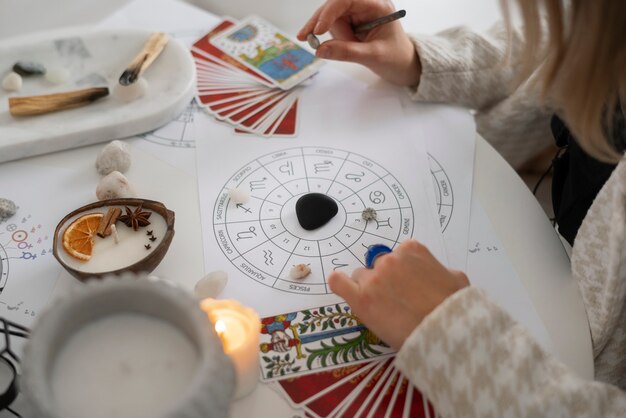
Astrological traditions often connect planetary movement with symbolic meanings, archetypes linked to themes like ambition, love, discipline, and change. Whether viewed as spirituality, cultural language, or psychological metaphor, these symbols can function as prompts that help people organize complex feelings. At the center of curiosity is the question of how astrology works, and many readers explore it not to obtain guarantees, but to find a structured vocabulary for inner experience that might otherwise feel vague.
Why repeating patterns feel so convincing
The mind is skilled at recognizing patterns, and it naturally searches for explanations that reduce uncertainty. When someone reads a description that matches their mood or situation, the match can feel powerful, even if the language is broad. This doesn’t automatically make the experience meaningless; it can still provide clarity by encouraging reflection and self-honesty. People may notice repeating dynamics like the same conflict arising in different relationships and use cyclical framing as a way to break habits rather than simply endure them.
Turning points, thresholds, and the meaning of timing
Major life shifts often come with a feeling of “now or never,” even when the decision took months to form. Cyclical thinking emphasizes thresholds: moments when the old approach stops working, and a new one is required. In that sense, timing becomes a theme rather than a clock. Some people use this lens to choose when to launch a project, deepen commitment, relocate, or simplify responsibilities. Even if the cycle is interpreted symbolically, it can still prompt a more intentional relationship with change.
Relationships seen through rhythms of closeness and distance
Connection rarely stays constant; intimacy grows, plateaus, and sometimes cools before returning in a different form. A cyclical view can help people accept that fluctuation without immediately labeling it as loss. It can also highlight how different personalities seek closeness in different ways, some through conversation, others through loyalty, shared tasks, or quiet presence. When people apply this framework thoughtfully, it can reduce blame and increase curiosity, encouraging partners and friends to ask what each person needs during a given phase.

Daily life as a laboratory for reflection
Cosmic cycles become most interesting when they’re tested against ordinary moments: the tone of a workday, the ease of a conversation, the urge to rest, or the willingness to take a risk. Many people track moods and outcomes, not to prove anything, but to observe themselves with more precision. Over time, they may notice that certain kinds of days are better for deep focus while others suit social tasks or creative brainstorming. This is where astrology’s everyday impact can appear, not as fate, but as a repeating prompt to check alignment between intention and action.
The role of skepticism, science, and personal meaning
Skepticism plays an important role in keeping interpretation grounded. Some people treat astrological systems as cultural narratives or psychological mirrors rather than measurable forces, and they still find value in the practice. Others believe in a more literal connection between celestial movement and personal experience. Between these positions lies a broad middle: individuals who don’t demand proof to engage with symbolism, yet remain careful not to surrender agency. A healthy approach emphasizes choice, reflection, and emotional responsibility, regardless of belief level.
Conclusion
Cosmic cycles endure because they offer a way to think about life as rhythmic rather than random, helping people hold uncertainty with a little more grace. When experience is framed as movement through phases of growth, consolidation, release, renewal, setbacks can feel less final, and transitions can feel less frightening. Whether approached as tradition, metaphor, or personal ritual, the idea of cycles invites a deeper question that stays relevant in every era: how do we notice timing, meaning, and change without losing our freedom to shape what comes next?